
Customer Support and Consultation
Do you require trustworthy sandwich panel that is strong, efficient, and cheap? Join us and let us build something sturdy, sustainable, and affordable.


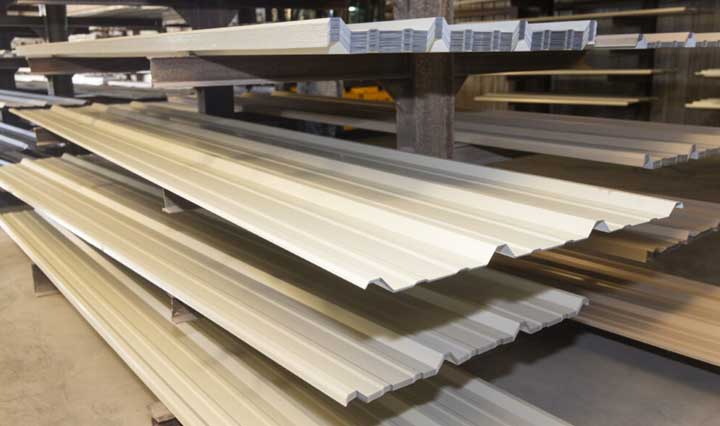
The supply chain can be broken down into several key tiers, from raw material to finished components.
Raw Material Producers
Steel Mills: These are the foundational suppliers. They produce raw steel in the form of coils, plates, sheets, and structural sections (I-beams, channels, angles) through processes like basic oxygen furnaces or electric arc furnaces.
Key Players: Large international companies (e.g., ArcelorMittal, Nippon Steel, POSCO) and regional mills.
Component Manufacturers & Fabricators
This tier transforms raw steel into the specific parts for a building. Suppliers here can be categorized by what they produce:
Primary Frame Fabricators: These are often the "Systems Builders" (like Butler, Varco Pruden, Star Building Systems) or specialized fabricators. They take raw steel plate and cut, weld, and drill it to create the main columns, rafters, and beams according to engineered drawings.
Secondary Member Roll-Formers: These companies specialize in continuously shaping steel coil into long, lightweight sections:
- Purlins & Girts (C and Z-sections)
- Eave Struts
Cladding & Liner Panel Manufacturers: These are critical suppliers for the building envelope. They roll-form steel coils into profiled sheets or fabricate sandwich panels.
Accessory Manufacturers: Companies that produce specialized items like:
Fasteners: High-strength bolts, self-drilling screws, and washers.
Insulation: Fiberglass batts or foam cores for panels.
Coatings & Paints: Suppliers of the galvanized coating and paint systems (e.g., PVDF, Polyester) applied to coils.
Doors, Windows, and Skylights.
Distributors and Stockists
Role: They purchase large quantities from mills and fabricators and sell smaller quantities to contractors and smaller builders. They often hold inventory of common items like standard structural sections, rebar, and corrugated sheets.
Benefit: Provide local availability and faster delivery for smaller projects or missing components.
Total Package from a Systems Builder:
How it works: You contract with a single company (e.g., a Butler Builder) who supplies the entire building system—primary frame, secondary steel, cladding, accessories, and often the erection drawings.
Advantage: Single-source responsibility, guaranteed compatibility of all components.
Best for: Clients wanting a turnkey solution and standardized, high-quality buildings.
Component-Based Sourcing:
How it works: You act as your own general contractor or hire a builder who sources different components from various specialized suppliers.
Example: Primary frame from one fabricator, secondary steel from a roll-former, and sandwich panels from a cladding manufacturer.
Advantage: Potentially lower cost, more flexibility to choose best-in-class components.
Disadvantage: Requires more coordination and you assume the risk for component compatibility.
Hybrid Model:
How it works: A main contractor sources the primary and secondary steel as one package and then sources the cladding and accessories separately.
This is very common, as the cladding is a major cost and aesthetic driver that the client may wish to select independently.
 Poultry control sheed Agro farm Food & Beverages Garments & Textile Cattle Farm Hospital room O.T Room Pharmaceutical production room Clean room Lab room Cold room Container house Security post Police box Pot house Cottages /Banglo Partation wall
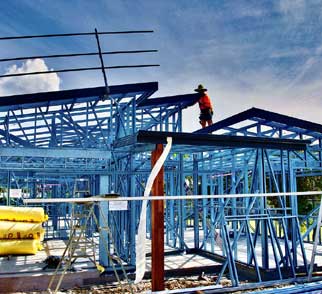

A prefabricated steel building is a system of standardized, factory-made steel components (columns, beams, rafters, purlins, girts) that are designed to bolt or weld together on-si
Read More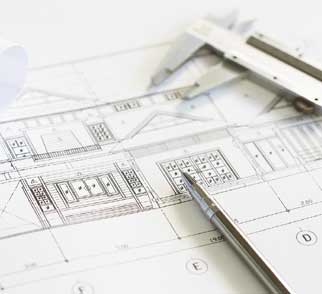

These services transform a client's concept into a safe, efficient, buildable, and code-compliant reality. This goes far beyond simple drafting and involves deep engineering expert
Read More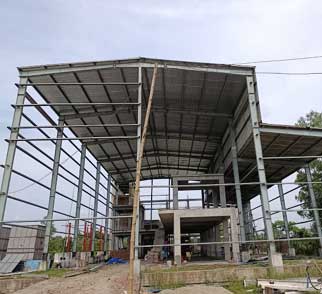

Steel Building Roof Solution Work encompasses the entire process of designing, supplying, and installing a roof system that is structurally sound, weathertight, durable, and therma
Read More
Do you require trustworthy sandwich panel that is strong, efficient, and cheap? Join us and let us build something sturdy, sustainable, and affordable.
A sandwich panel is a prefabricated building material made of a lightweight insulating core sandwiched between two rigid, strong outer layers.